
Washer smells: mildew, rotten eggs or sewer, and what each smell means
Musty, rotten eggs or sewer: each washer smell points to a different source.
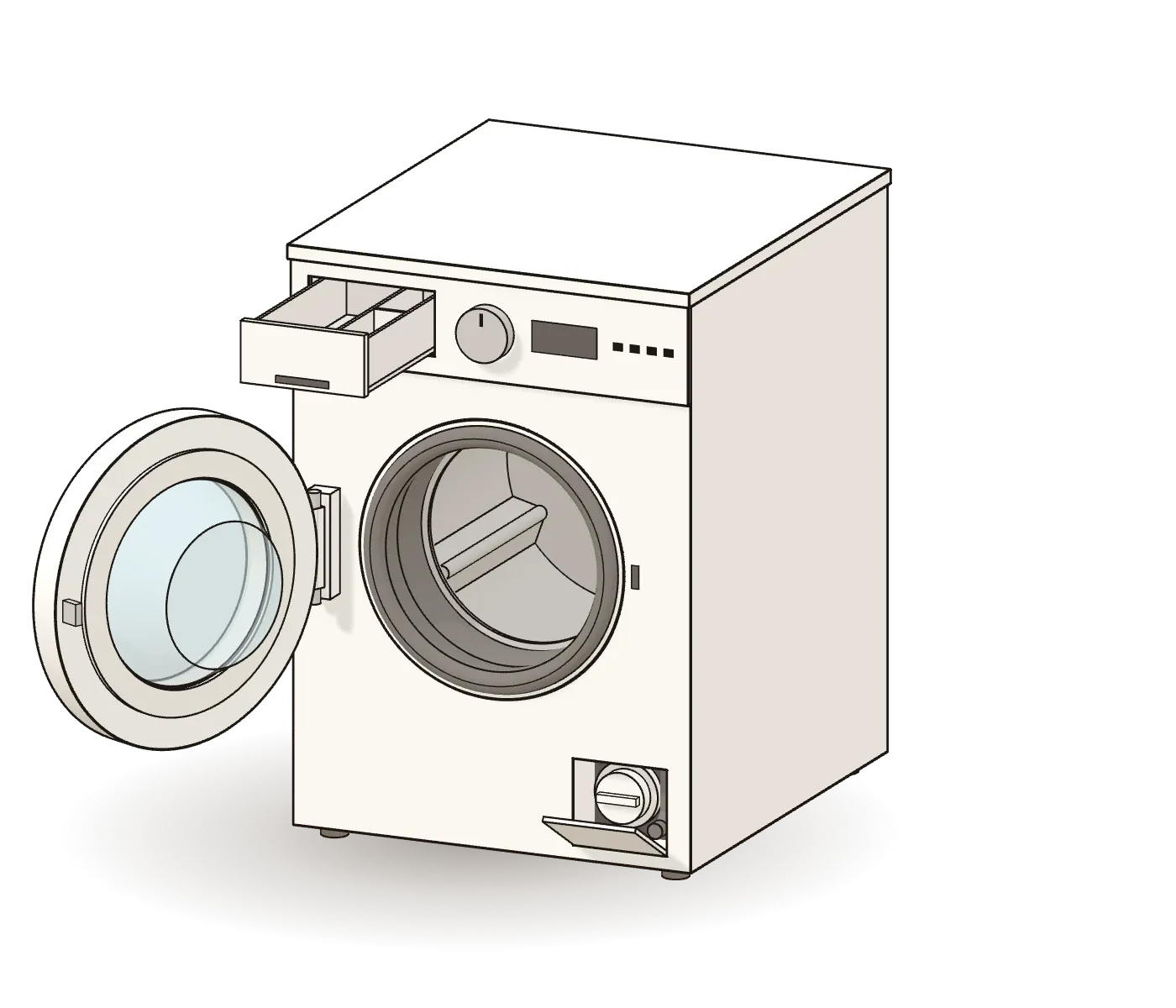
- Detergent drawer
- Control panel
- Drum
- Door lock
- Door boot
- Drain pump
A musty smell comes from inside the machine, where water stays between loads. A rotten egg smell is hydrogen sulfide, which can arrive with well water anywhere in Florida or come from the water heater. A sewer smell can rise from the drain behind the washer. Below is what each smell means, what homes here add to it, and when the smell points to a repair.
What each smell means
Musty, like a towel left damp in a bag. Mildew and old soap inside the washer, where water stays between loads.
Rotten eggs or sulfur. Hydrogen sulfide, a gas people notice at very low levels. It can come from well water, the water heater, a water softener or bacteria living in a drain.
Sewer. Gas from the drain line, coming through a trap that has dried out. On a well, the water itself can smell of sewage: the Florida Department of Health lists that smell, and a musty one, among those iron bacteria give well water, often with yellow, orange, red or brown stains.
Burning or hot rubber. Not a cleaning matter at all: unplug the washer and call.
What homes here add to it
Three things about homes in Lee and Collier counties feed these smells.
In a Florida summer, dew points run 65°F to 75°F, and on a typical summer night the air is above 90 percent relative humidity. Inside a washer that air never quite dries anything.
About one home in five in the two counties is held for seasonal use: the Census Bureau's 2024 American Community Survey estimates 84,002 such housing units in Lee and 61,840 in Collier, out of 713,993 in both counties. A washer left shut for months keeps water inside, and in that air it grows mold, as our washer page notes. Meanwhile the water in the trap of the drain behind it slowly evaporates.
Not every home is on city water either. Collier County's water district does not serve Golden Gate Estates, where homeowners run their own wells, and the Florida Department of Health says hydrogen sulfide can turn up in wells anywhere in the state and can leave an odor in clothes. Even the City of Fort Myers, which draws its water from the Floridan Aquifer, sends it through degasifiers after reverse osmosis to remove mainly hydrogen sulfide.
Mildew: where it grows and why it comes back
Mildew grows where water and old soap stay between loads: in the folds around the door of a front-loader, in the detergent drawer and at the bottom of the washer, below the drum. Top-loaders get musty too, mostly under a lid that stays closed.
Two signs say cleaning will not be enough. Black marks that are stained into the rubber around the door, rather than sitting on it, mean the seal has worn. And a washer that smells again a day or two after a cleaning has water that is not leaving: dirty water left inside because the washer does not drain completely, or water pulled back in from the house drain. Both are repairs.
Rotten eggs: often the water, not the washer
Hydrogen sulfide usually reaches a washer with the water. The Florida Department of Health notes that the smell is often stronger from the hot faucet, because heat drives the gas out of the water, and that sulfur bacteria can live in a water heater, a softener, a well or the plumbing. Top-loaders take their hot water straight from the house, so the smell rides into the drum with it.
When the smell stays in the laundry room while the water smells clean, the drain or the washer itself is the next suspect. Bonita Springs Utilities names bacteria growing inside a drain as one source of a rotten egg or musty smell, and that is where we look next.
Sewer smell: the drain behind the washer
The drain hose behind the washer hooks into an open pipe, the standpipe, or in many condo closets into a small box in the wall. The Florida plumbing code requires every standpipe to have its own trap, and every fixture trap holds a seal of 2 to 4 inches of water against the sewer line. The code also lists trap seals that can be lost to evaporation among those a building has to protect.
A trap on a drain that sits unused can dry out and let sewer gas into the room, which is why the smell often greets owners coming back after the summer. A sewer smell that stays once the washer is back in use is worth a call: when the washer drains fine and the house drain is the trouble, we show you where it sits.
When the smell points to a repair
Cleaning does not fix these.
A door seal torn or stained through. We replace a seal like that rather than clean it, and a torn or folded seal also drips onto the floor under the door.
Water left in the drum, or a drain code on the display. The washer is not draining fully, and the water it leaves behind is what keeps the smell coming back.
Tell us the brand and which smell it is when you call or text.
Bonita Springs and Naples area
Leave these to us
A burning smell, smoke or a breaker that trips again after a reset: unplug the washer and call. Nothing behind the panels is a cleaning job.
A front-loader stays locked while water is inside; never force that door.
Water near the outlet or the cord: switch the breaker off before you touch anything.
Bleach mixed with vinegar or with an ammonia cleaner gives off a gas that irritates the eyes, nose, throat and lungs; never combine them in the drum.
A stacked pair in a closet: do not pull it out alone.
What our technician checks
We clean the places where the mildew grows, drain the washer and test the drain system, and replace what has worn or failed. We also check that the washer empties fully. When the washer drains fine and the house drain is the problem, we show you where. You hear the price after the diagnosis, before any work starts. The service call fee is waived when you go ahead with the repair.
We cover homes in Lee and Collier counties around Fort Myers and Bonita Springs; see also Washer repair in Bonita Springs.
Questions about washer smells
Does a rotten egg smell mean the water is unsafe?
The Florida Department of Health says sulfur bacteria are not harmful and that in most cases the smell has nothing to do with how clean the water in a well is. To make sure well water is safe to drink, it advises regular tests for total coliform bacteria or E. coli, and a test of a private well at least once a year.
Why does the washer smell worse after a summer away?
A washer left shut for months keeps some water inside, and in Southwest Florida's humidity mildew grows on it. The trap of the drain behind the washer can also dry out over the summer and let sewer gas into the room. If the smell does not clear with the first loads, call us.
Smell still there? Call or text us and we will find where it comes from.
Bonita Springs and Naples area
Sources
Florida Climate Center: Humidity in Florida
U.S. Census Bureau: Vacant housing units, American Community Survey
Florida Department of Health: Well water odor and staining
Bonita Springs Utilities: Common water quality concerns
City of Fort Myers: Water treatment plant; Water FAQ
Collier County: Public utilities master plan summary (2015); Water supply facilities work plan (2019)
Florida Plumbing Code 2023: Indirect and special waste; Traps
South Davis Sewer District: Sewer odors and P-traps
Children's Hospital of Philadelphia: Household cleaners
Updated